Category Archives: How to Cook “American Style”

Lesson 10 – BBQ Chicken Wings and Legs

It’s party time and backyard BBQ season is upon us! When I think party, I think of wings! Summer is a good time for BBQed wings or BBQed chicken legs. Both of these I think go great with my version of a honey barbeque buffalo sauce.

Prepare the chicken wings; chicken wings may have to be prepped before they can be cooked depending on where you get them. Sometimes the wings come whole and you have to separate the “drumett”, from the “winngett” and discard the wing tip. I do this by carefully working my chef knife between the joints of the chicken wing and cut through the cartilage separating them. Chicken wings can be a lot of work, but just as Mussels are difficult to clean, they are well worth all the effort in the end.

Once prepped I toss my wings in a bit of vegetable oil and spices before grilling them.

INGREDIENTS:

Whole Purdue Chicken wings cut into wings and drumetts

          (Frozen wings can be substituted for fresh)

2 tablespoons olive or vegetable oil

½ cup Frank’s Red Hot Sauce

Half stick butter

¼ cup Sweet Baby Ray’s honey barbeque sauce

½ cup Marie’s Blue Cheese salad dressing

1 tablespoon Cholula Hot Sauce

Baby Carrots and Celery sticks

Spices:

Paprika

Onion powder

Garlic powder

Salt and pepper

DIRECTIONS:

Preheat gas grill for 10 minutes or until the charcoal briquettes are gray. In a large bowl, place in the wings and coat with oil. Sprinkle with spices and toss with oil until the wings are evenly coated. Place the wings on the grill in a single layer and cook over medium to medium high heat, turning often, until golden brown and crispy. While the wings are on the grill, keeping warm on low, make the sauce. Melt butter in a small saucepan on your side burner. Add Frank’s red-hot sauce, Sweet Baby Ray’s Barbeque sauce, and Cholula to the melted butter and heat on low until warm.  Do not boil. Pour the sauce over the wings to cover in a large bowl and toss until coated.

Serve with baby carrots, carrot sticks, celery sticks, Marie’s blue cheese dressing or ranch dressing.

NOTES: do not use oil with frozen wings. I like this method (bbq) of cooking the wings because the whole house does not smell like grease and fried food because it’s done on the barbeque.

You can replace the wings with chicken legs or thighs. They just take longer to cook!

Wings before the sauce

Sauce

1 cup Frank’s red-hot sauce

½ stick salted butter

2 – 4 tablespoons Sweet Baby Ray’s original BBQ sauce

1 tablespoon original Cholula hot sauce

1 tablespoon honey (optional)

In a small pot add: Frank’s red-hot sauce, butter, BBQ sauce, Cholula sauce, and honey. Heat buffalo wing sauce until all the butter is melted and sauce just begins to simmer. Don’t over heat the sauce.

Serve wings with:  Marie’s blue cheese dressing, celery sticks and carrot sticks.

Match with: Sam Adams – Larger, Oktoberfest or Porch Rocker

Memorial Day Weekend – Hot dogs with all the trimmings

Memorial Day Weekend and Hot Dogs go hand in hand. Here on Long Island, we call ’em: “Dawgs” and beer! Whether it’s root beer or the icy cold adult version, you need something to drink with a tasty dawg. There is nothing like a frosty cold one on a hot summer day!

I start with making either Sabrett brand or Nathan’s hot dogs. I often buy them in May at Costco. It’s only the beginning of the summer season and we go through so many over the course of the next two months. I don’t want to run out, so it’s the club size package for me! I freeze them so I always have a good supply for last minute BBQs with family, friends, or neighbors. Franks, weenies, Red Hots, or dawgs, whatever you call them they all cook quickly on a hot grill. Therefore, it’s best if we prepare all the side dishes first.

Potato, macaroni and cold slaw always take the longest and are more labor intensive than baked beans from a can. You can make these all on the same day (like Memorial Day at 6:00am), but they taste better if they sit overnight and you let the flavors blend. You can make these salads up to five days in advance.  I start cooking Thursday for MEMORIAL DAY WEEKEND.

There are other easy sides too, like sauerkraut. You can make this at home, but I buy the fresh stuff that comes in a bag in the meat department for this big weekend, like the Board’s Head brand. The canned stuff is horrible if it’s overcooked right from the can. You cannot uncook something that is overdone, yuck. There isn’t anything you need to do to good sauerkraut aside from heat it up when using it for hot dogs. We can do that in a pot on the side burner of the BBQ.

Oops. That might be where my stockpot is full of corn on the cob. Nope, Memorial Day weekend is too early for that. We will save that recipe for the Fourth of July. Please remind me, if I forget.

Next, we have Baked Beans. That can go one of two ways. You can serve them directly from a can by just heating them up in a pot on the stove (I use my Coleman stove for this), or you can make them yourself in the oven.

Let’s say it’s a party…I NEED a party as things open up now after COVID! I have set up the Coleman stove to keep the sauerkraut and the baked beans hot.

We could however make the beans from scratch and have them in a chafing dish. Okay, chafing dish it is. See the Baked Beans recipe. After you’re done making the beans, let’s look at the Spicy Onions recipe and we can keep that on the burner next to the sauerkraut.

We will need Condiments like: spicy brown and mild yellow mustard, ketchup, and relish.

Chili would be good, but ONLY after Labor Day (no more white blouses to be ruined are worn after Labor Day.) Sometimes I wait until later in September or early fall (Octoberish) to make chili. When the weather turns colder and you need to keep the Dawg hot, it works best when it’s cool out. For now, we have beans, for the kid in all of us!

Oh! Yes! We need pickles and maybe potato chips too!

Now, it’s time to fire up the grill! The gas barbeque vs. charcoal BBQ is always a dilemma. There is nothing better than a burger or a steak over charcoal but what about a hot dawg? Well, it depends what else is on the gas grill at the moment. I always start my hot dogs on charcoal and keep them warm on the gas grill in the beginning of parties. Once the charcoal is gone or the kids are toasting marshmallows, I move everything to the gas grill. I may have a batch of chicken wings or chicken legs on the grill early on. In that case, I keep the burgers and the dawgs on the charcoal grill.

In winter, I stop BBQing and the hot dawgs move inside. Then, they are the New York City “dirty water dawgs” or fried in a pan as if Ben’s Deli or Nathan’s made them. These recipes should be posted in the fall (Novemberish), so check back then.

Before you go and invite all those guests, don’t forget to check out the BBQ wings recipe and Chicken legs recipes that I will post tomorrow.

Also try these side dishes: Cold Slaw, Potato Salad, and Macaroni Salad

Enjoy! Stay safe and have fun!

-The Drunken Chef (Russ)

Lesson 11 – Homemade Hamburgers

May 26, 2021

When George Forman was asked what his favorite food was, he always replied, “Cheese Burgers”! He even said that after he was a millionaire and could eat anything or anywhere he wanted.  No wonder it was HIS name on the George Forman grill! I even owned one myself and used it when I lived in a small apartment with no real kitchen. It worked great too! Thank you Mr. Forman, for all those wonderful cheeseburgers back then.

            Today, I own a huge outdoor propane gas grill to make my hamburgers, plus a few other types of outdoor grills. However, cheeseburgers cooked on the charcoal grill are still the best of all, maybe even as tasty as from the George Forman grill. I love all kinds of homemade hamburgers.  Rarely (pun intended), I even eat them out at restaurants too. 

I think the best burgers are still the ones I make at home. Today, we will discuss how to make the recipe HOMEMADE HAMBURGERS.

Any BSA Scout that I have supervised cooking hamburgers still remembers some of my tips or tricks of cooking them just right (I hope!). When you are out in the middle of the woods with a big group of Scouts, always cook the hamburgers to 160ºF. I never ran the risk of anyone getting sick from an undercooked burger. The trick was NOT to overcook them. A hamburger that is too well done is inedible to me.  At home, I cook all my hamburgers to order. If you want your burger rare, then that is your business. If you order it rare, then rare you will get.  Rare by the way is warm and red in the middle. Rare is when the hamburger reaches an internal temperature of 130ºF on an instant thermometer. I like my burger medium-rare myself, or 135º, medium is 145º, medium-well is 155º and well is 160º. Any meat will continue to cook for 10 minutes as it sits after being pulled off the fire. If you are not directly handing someone a burger right off the grill to eat, always then UNDER cook it by 5 or 10 degrees and it will cook as it sits. Then, it will be done perfectly when they come up to get it and sit back down.  

The trick to me is timing and a meat thermometer. I own a wonderful instant read meat thermometer. (See the gadget list). Back in the woods with the Scouts, we would cook frozen hamburgers on a grill. I would tell the Scouts, “watch the top of the burger but don’t touch it. First, you will see it defrost. Still, don’t touch it. Then when you see the blood start to rise up to the surface, NOW you can flip it over! Cook it until the same thing happens on the other side. When you see the burger beading up again, then add cheese. As soon as the cheese is melted, THEN move it to a bun. It usually took two or three young scouts all working together to keep the hamburger line moving along smoothly so everyone ate all at the same time and the food was hot. The hamburgers were never dried out or over cooked using this method and they were always all eaten. Even the adults actually enjoyed them!  

At home, I rarely use frozen burgers, unless it is one of my BIG office parties where there is SO much food that you don’t know what to eat next anyhow. This is when I buy the BIG 1/3 of a pound frozen hamburgers. I can actually get those cook to order at least. I buy mine from a local butcher who makes them fresh then freezes them.  

I remember with great fondness my twenties and camping in the woods. All those frozen hamburgers we ate during a four day long Memorial Day weekend. They were yummy. That was with thirty other twenty something’s with a lot of beer to wash those burgers down. Boy we went through a LOT of burgers, chicken, and beer that weekend!

Until tomorrow be happy, stay healthy and eat well!

The Drunken Chef (Russ)


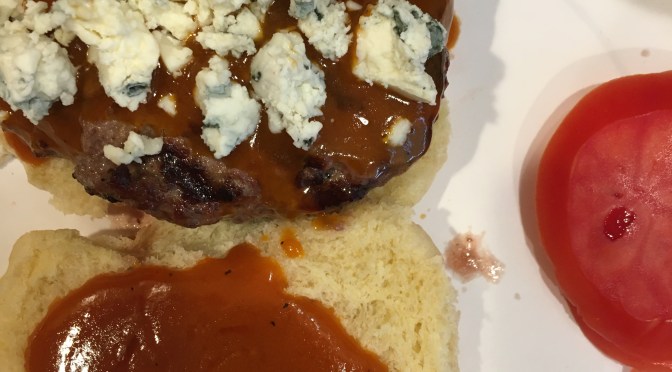
Buffalo Burger with Blue Cheese
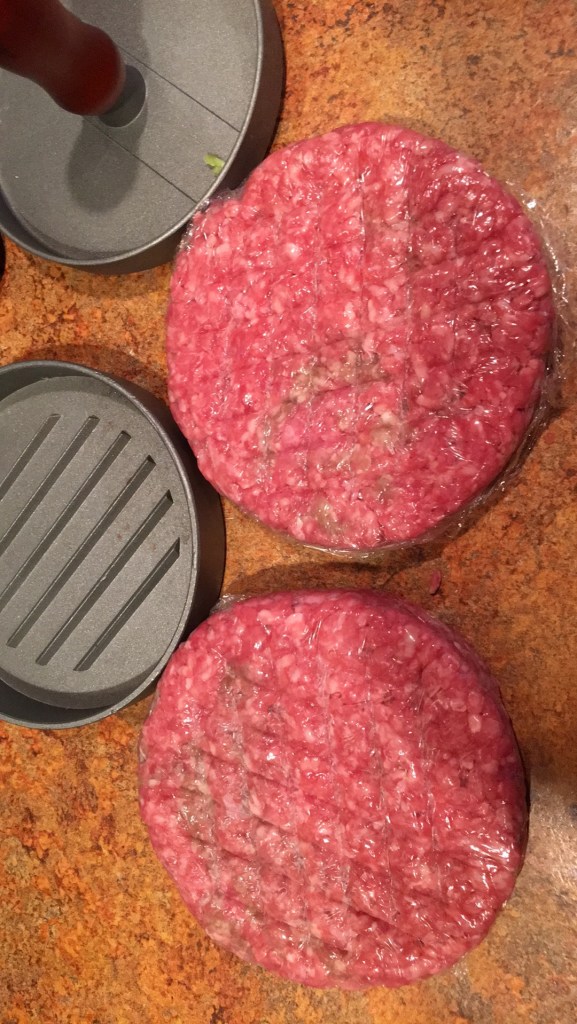
The hamburger Press helps makes even sized patties.

Lesson five: The Brunch Menu Part Two

Eggs Benedict. Yum! Poached eggs are the pinnacle of egg cooking for any chef. The problem is that it’s challenging to make a poached egg that looks like something you would get at a restaurant.

My first tip is that the fresher the egg the better success you will have, as the whites are less “runny” or more viscous when its fresh. When an egg begins to get older, the whites turn more “watery”. Use the freshest eggs you can buy for a better chance at success.

You can make a poached egg and eat it plain, without making it into something else like Eggs Benedict, but why go through ALL that work if a plain egg is all you want? Hell, why not just boil the thing in its shell until it’s soft-boiled and be done with it. Nope, you want to learn how to poach an egg so you can EAT Eggs Benedict or Eggs Florentine.

For eggs benedict, I will suggest starting with toasting the English muffins. I toast mine under the broiler. That leaves one side soft and makes it easier to cut and eat with a fork in the end. Then we need to work on the Hollandaise sauce.  Great sauces are what great chefs strive to achieve. There is a chef’s station in French restaurants called a Saucier. The saucier not only makes all the sauces for the entrées but they can be involved in making stews like Beef Bourguignon, hot hors d’œuvres, and sautéing food to order. Mostly, they are the chefs who make the sauces for the entrées.

This whole sauce making thing is no easy task. Ask anyone who has screwed up the Thanksgiving turkey gravy and never heard the end of it, year, after year, after year. It’s difficult because it can take as many as two days to make some sauces all from scratch. Yet some sauces only take minutes. Hollandaise sauce is called a mother sauce (According to French cooking anyway) and this is one of those sauces that is quick to make. That does not make it easy, just fast to make. Hollandaise can be then used to make “other” sauces by adding, for example, fresh herbs. The sauces made from Hollandaise are called: Béarnaise Sauce, Dijon Sauce, Foyot Sauce, Choron Sauce, & Maltaise Sauce. They are in a class called Emulsified Sauces. I will be writing a whole lesson on just sauces in the coming year as we explore each one of the over two dozen sauces and how they compare to say “Turkey Gravy.” Yes, that is a sauce! It’s not “Frenchie” but it’s a sauce. There are five mother sauces in all, and each one has other sauces that are made from it. To explain it all now I would have to get out my charts and graphs. It’s a whole big science lesson thing and it is best saved for another day or a future YouTube show.

Let’s get back to today’s feature article. Pull out our medium sized saucepot, for poaching the eggs. I use a 1.5-quart size pot filled with 1-quart of cold tap water. Add two teaspoons of white vinegar and one tablespoon kosher salt (2½ teaspoons of table salt). The salt and vinegar are not for taste but rather to help the poached egg to form while it cooks quicker and to help produce a better-looking poached egg. Start by bringing the water and stuff to a boil so we can add the eggs later.

Now let’s make that sauce!


Hollandaise Sauce

To make 2 cups of Hollandaise Sauce, you will need:

  • 1 1/4 lbs. of butter (5 sticks), clarified* (you should end up with about 1 lb. of clarified butter)
  • 1/8 teaspoon Salt, (kosher preferred so less if its table salt)
  • 2 Tablespoons White Wine Vinegar
  • 2 Tablespoons cold water
  • 6 Egg Yolks **
  • 1-2 Tablespoons of lemon juice
  • Salt, white pepper and Cayenne Pepper or Hot sauce to taste

DIRECTIONS:

  • Clarify your butter*. (this already makes this complicated)
  • Place salt, vinegar and crushed peppercorns into a saucepan and reduce by 2/3. Remove from heat and add water.
  • Transfer reduction to a stainless-steel mixing bowl.
  • Add egg yolks** and beat over a simmering pot of water until the egg yolks become thick and creamy. (If unsure about the thickness, monitor with an instant read thermometer and make sure the eggs do not exceed 150°F/65°C).
  • Once the egg yolks have reached the desired thickness, remove from heat. Slowly drizzle in the warm clarified butter into the yoks while beating with a wire whisk, starting with just a few droplets at first to get the emulsion going.
  • Continue streaming in the clarified butter until it is completely incorporated. If the hollandaise becomes too thick before all the butter is emulsified in, thin the hollandaise with a couple drops of warm water.
  • Finish by seasoning your hollandaise with salt, lemon juice and cayenne pepper to taste. Add just enough cayenne to help cut through the fat of the hollandaise and to add depth of flavor; your hollandaise should NOT be spicy.
  • You can adjust final consistency by adding a little bit of warm water to both lighten the sauce and give it a better flow.
  • The Hollandaise should be kept warm over a double boiler until ready to serve. The best holding temperature is about 145°F/63°C. This temperature both discourages the growth of bacteria and is hot enough to keep the fat in your hollandaise from solidifying. For both food safety and quality control, hollandaise should not be held at this temp any longer than two hours.
  • Common Secondary Sauces: Bearnaise, Maltaise, Mousseline, Foyot, Choron.

Classically Served With: Eggs (Eggs Benedict), Vegetables (especially Asparagus), light poultry dishes, fish, and Beef (as a Bernaise Sauce).

Holy cow that was a lot of work for just two cups of this stuff but it’s so good! Now if you are not into trying to prove yourself as a top chef and still want to try your hand a poaching eggs or making eggs benedict, I have a suggestion. Shush, don’t tell anyone, but it is called Knorr’s Hollandaise sauce. I use it when I’m being lazy, which means I always keep it in my spice cabinet and use it before it expires! Now you can concentrate on those eggs!

Now let’s make some eggs and heat up some ham. In a small pan add butter and fry up some deli ham or Canadian bacon as it is traditional. As the water comes to a boil begin to crack your room temperature eggs into Pyrex dishes.  I find when starting out it makes sliding the eggs into the water easier. Pro Tip: Stir the water so it spinning around slowly, slide the egg right into the center and watch it drop to the bottom. Add the next egg and so on up to 6 eggs. As the eggs rise up and come to the surface they are almost done. Professional chefs remove them now and place them in water that is a perfect 150 degrees to “cook through and to kill any salmonella.” I myself let them float on the water just a bit longer, perhaps only a minute or two before placing them on my already toasted English muffin. It’s time to assemble said Eggs Benedict, place a slice of ham or Canadian bacon on one half of an English muffin. Is any of this American? Next put the eggs on the ham. Why do we do it in that order? Answer: The ham stops the English muffin from getting way too mushy. Now, (wait for it) pour over your Hollandaise sauce. YUM! Serve immediately with a Bellini or Mimosa! I will have to try it with a Bloody Mary next time.

This whole dish can be changed up very easily to a second recipe called: Eggs Florentine. This is simply done by swapping out the ham for some cooked and well drained spinach. I have used asparagus too but I don’t know what that’s called. Left over lobster meat on top is also wonderful but who ever has leftovers from lobster?

How to Clarify Butter* or make “Drawn Butter”:

Clarified butter, (my mother always called this drawn butter), is unsalted butter that is melted down and allowed to separate out over very low heat so that the proteins that are milk solids can be removed. After the clarification process, the butter now has a higher smoke point and makes it great for cooking or frying in. I will explain why shortly.

The easiest way to clarify butter is over a water bath or double boiler. This allows you to gently heat the butter just to the boiling point of water or 212 degrees and will never get any hotter! At this temperature, the water literally bubbles up and out of the butter as it evaporates. What’s left is the whey proteins that form a white foam on top. Eventually the foam will dehydrate as well and collapse as it cooks, leaving you with a thin skin of whey protein on top. Some of the dry casein particles now sink to the bottom. If you did not use a double boiler for this process, they would eventually start to brown. We did, so we are safe to finish the process. Simply skim off the “skin” using a ladle or large spoon. Then pour off the clarified butter, being careful not to include any of the white casein particles that have settled to the bottom. Ka-Pow – Clarified butter! Clarified butter can keep in the fridge up to one year! So you can definitely make this ahead of time for any dish. I have a whole mason jar of this liquid gold in my fridge.

What happens if you do not use a double boiler? Then you run the risk of browning those milk proteins on the bottom of the pot. In that case you have now made something called “Ghee”. Ghee is a clarified butter made using almost the identical technique as above, but is cooked in a pot instead of a double boiler. Because the milk solids come into direct contact with heat from the burner, they can get to higher temperatures than 212°F. It is at this point they start to brown. If you continue browning the milk fats (slowly) then the finished Ghee will have a dark brown color and a nutty aroma. This is very good for other recipes but it is not what we are looking to use in our Hollandaise Sauce. I love science and there is a LOT of it in cooking but no one tells you about it. No one except, Alton Brown and Harold McGee (listed alphabetically). These are just two of my favorite cookbook authors. Enough science for today, go enjoy your breakfast.

I think it’s time to take a break from breakfast so next time maybe we will do a lunch dish. Thanks for reading today and until next time; Stay Healthy, Be Happy, and Eat well!  

** Separating eggs: The old-fashioned way of separating eggs is by transferring the yoke back and forth between the half shells over one bowl. Then moving each item to its own bowl so as not to contaminate the eleven prior separated eggs with a broken yoke on the twelfth try. The second method also involves three bowls. One bowl holds up a slotted spoon or strainer. Crack the egg onto the slotted spoon and then move the yoke to its own bowl. Then move the white into its own separate bowl. Repeat this process until you have enough yokes or whites for what you need. Extra egg whites can be frozen for future use. Mixed eggs (whites with broken yokes) can be used for making omelets.

Until tomorrow, be happy, stay healthy and eat well.

The Drunken Chef (AKA Russ)

© Russ Ahrens and The Magic of a Perfect Pairing,2023

PS – You can also add to you menu the following:

FRENCH TOAST

Lesson five: The Brunch Menu Part One

Ah Sunday! I love Sunday…even though it’s Monday. We can still reminisce about Sunday! The one day I get to sleep in an extra hour or two! Sundays remind me of my childhood. When I was a kid the newspaper was delivered every day and on Sunday there was that big fat paper with all those great comics and a magazine. Back then, Sunday was the only day the comics were in color. If it were Easter Sunday that meant I had a fresh new batch of Silly Putty too! You could press the Silly Putty to the newsprint and when you peeled it off you would have a color comic on it. I don’t know why that amused me back then but it kept me busy for a bit. At least until breakfast was ready. Did you know that the silly putty trick does not work anymore? They changed the ink or something. Speaking of Easter Sunday, it felt like it was so early this year. It feels like I missed it somehow. It is only now that it is getting warmer outside. Last night, it was even unusually cold for this time of year. My heat even started coming on and it ran all night! The home heating oil god hates me apparently and wants me to burn as much of the stuff as he can produce before having to turn on the air-conditioners before summer hits. Wow! Where did that rant come from? It is Sunday, so let’s chill out with a big Sunday morning breakfast!

We have made pancakes, eggs, and omelets. What’s next? Mmm. Let’s begin by making some coffee, then a frittata. A frittata is only really a giant omelet, but it comes from the oven!

We will need a 9 inch by 13-inch glass Pyrex baking dish and a pan to make the bacon and or sausage in.

We will also need:

INGREDIENTS:

12 Eggs

1 TBLS. Milk

Hash browns or potato tots (defrosted)

One-pound cook Bacon (crumbled)

One package of breakfast sausage (Cubed)

8 ounces shredded cheddar cheese (one package)

1 Tablespoon Vegetable oil

A few drops of Tabasco (To taste)

DIRECTIONS:

Preheat the oven to 350 degrees. Grease the bottom of your Pyrex baking dish with a little cooking spray or just a bit of canola oil or vegetable oil. Olive oil can be a little heavy tasting but if it’s all you have. Use a paper towel to swoosh the cooking oil around. You don’t need to swoosh the spray stuff. I am not really a fan of the spray stuff because I don’t know what’s in it. I own it. I use it on occasion, but I don’t like it when I do. Yet, easy is sometimes best! Now that the bottom has a nice thin nonstick coating lets add those store-bought home fries or tater tots. Why do I use these instead of making my own fresh? Mainly because I’m not masochistic. I could make them fresh sure but why do that today? Okay, here’s how.

Let’s peel and grate two or three large baking potatoes. Then get a large pan nice and hot. Add two tablespoons of vegetable oil or peanut oil (If you not allergic to peanuts, otherwise I guess use the vegetable oil). Now fry the potato up in the hot oil until it’s a nice golden brown on both sides. Drain the potatoes and cool them off. Now you can add them to the bottom of the pan. Most times, I use the ones I get from the frozen food section that look just like those hash browns from McDonalds. They work great once they are defrosted. I press them into the pan making sure they are placed next to each other and they are flat against the bottom. Then I pop the Pyrex dish and the potatoes into the oven for a few minutes. Check on them every five minutes. Take them out as soon as they start to get slightly brown and crisp up or begin to sizzle. In the meantime, while the potatoes cook, let’s make the bacon. If you have never made bacon before it takes practice to get it just right. Just don’t let your bacon burn or it will ruin your whole frittata. It is best to leave bacon out if it burns at all.  When done it should be a light golden brown so that it crumbles nicely. Please wait until its cool before crumbling. Otherwise you will need one of those Scouts I have mentioned in a previous post to preform first aid for the burns on your hands. See the how to make bacon lesson next.

Okay! Nice job on the bacon by the by! Now you can cook up all of those breakfast sausages in some of that bacon grease. I defrost it if its frozen, then I slice it. It is easier to slice cold sausages then hot ones. Do other cookbooks point these things out?

Have you been checking on your potatoes? If not, then they are plenty brown by now. Sprinkle the cooked sausage and the bacon across the potatoes spreading them across the whole dish evenly.

Now it’s time to break a few eggs into a large bowl. You can’t have a frittata without breaking a few eggs. Add a tablespoon of milk to the bowl with the eggs. Too much milk and the eggs won’t set. You can even add some Tabasco now. I like this stuff so I always add a little. Because we are using a dozen eggs, I would add about ten drops or five good shakes of the bottle. That is not even one-drop per egg. Most people don’t even notice the Tabasco if you don’t add too much! Next, scramble the dozen eggs using a wire whisk or fork from your flatware set. Do not add the cheese yet! This the same thing as adding too much milk. The eggs will not cook. You will have a cheesy custard casserole, ewe. Now pour the scrambled eggs into the pan filling it up ¾ of the way. Do not fill it to the top or it will spill over before it finishes cooking. Place the eggs in the oven. I hope you didn’t turn the oven off after taking out the potatoes. Bake for about 20 minutes. Check it after twenty minutes to see if it’s just set. If it is not done yet, then check on it every ten minutes after that until its set. Then sprinkle all that nice cheddar cheese on top! If you’re really a pro you grated a block of cheddar yourself. You saved money and hopefully your fingers too! Then place it back in the oven until it is all melty and yummy. Let it rest for only a few minutes and serve with fresh bagels, English muffins or toast. Add orange juice, tomato juice or pineapple juice. Add mimosas or Bellini’s or Bloody Mary’s if your home with friends and enjoy!

This recipe works in a cast iron Dutch oven as well. This will work if your ever stuck in the woods and need a good hearty breakfast meal in a hurry. To make it in a hurry you can precook the sausage and the bacon before the trip and bring it with you in a cooler with ice. You can even cook the bacon and sausage the night before while making dinner! Then just put it all in the cooler for the next morning. Dutch oven or Cast-Iron Pot cooking is a whole few separate lessons in themselves. In addition, you do not need water to clean a Dutch oven only coarse salt, oil and a $#@& load of paper towels! I will save that tip for the Scouts!

Next time we will cover poached eggs and Hollandaise Sauce for my favorite, Eggs Benedict. That’s all in our next Lesson…

Until tomorrow, stay awake, be happy and eat well.

The Drunken Chef (AKA Russ)

© Russ Ahrens and The Magic of a Perfect Pairing,2023


How TO Cook: Food safety

Now that we are working with raw eggs, making omelets and had our coffee I can bore you with a chat about food Safety. We are lucky enough in the United States to have probably over a dozen different agencies that are involved with protecting the safety and healthiness of food from the farm tot the table. These include but are certainly not limited to the USDA and FDA that help to enforce various rules and regulations that help insure a safe product on grocery store shelves or served restaurants. 

Why should the home cook be concerned then? Because there are still things that happen in nature naturally that are out of there control. Following proper procedures or guidelines when cooking help to keep your family and friends safe from getting a nasty stomach bug. Eww.  

Most bacterial contamination can be prevented with the proper care, handling and storage of fresh food. That big appliance in your kitchen that takes up SO much room is the refrigerator/freezer. To my surprise and dismay, it is not just there just to keep my beer cold (I really need to get myself a Kegerator for that)! In the United States we probably own the biggest refrigerators/freezers in the entire world. Why? Because we only go grocery shopping once a week or once a month if it’s a Cosco run. Therefore, we need someplace to keep all that fresh Dairy, Meat and Produce fresh and safe to eat!

Because bacteria grow and a much quicker rate the warmer it gets (usually between 40°F and 140°F) it’s a good idea to store our food in these chilly devices and keep the refrigerator at a temperature at between below 40° F (4° C) and 33° F 1° C). The freezer temperature should be set 0° F (-18° C). (Insert the picture of thermometer here)

There is some bacteria that are good. They help ferment wheat and barley into beer or grapes into wine. Cheese would not be cheese without it. Some bacteria are what make food spoil and smell bad.

Hand washing – Bacteria can be spread throughout the kitchen and get onto hands, cutting boards, utensils, counter tops and food. Cross-contamination is how bacteria can be spread from raw meat to raw vegetables. Always start with a clean surface. Wash your hands with warm soapy water and rinse and dry well. Wash cutting boards, dishes, countertops and utensils with hot soapy water. Restaurants often have their water temperature tested by regular inspections by the local health department to make sure it is hot enough to kill bacteria.

Wash your hands after handling any raw beef, poultry, fish or even eggs.

Wash you counters, cutting boards and knives after cutting any raw beef, poultry, fish.

I even clean my sponge in hot soapy water and then place it in the dishwasher with the dishes about three tiems a week. I also two use separate sponges. One is for dishes and the second is for counters tops and tables. I always prevent cross contamination by using a clean cutting board between preparing meat and vegetables.

All vegetables like potatoes and those green bell peppers we used for our omelet always need to be washed under cold water.        

Defrost frozen food in the refrigerator, in cold water, or in the microwave.

Keep hot food hot and cold foods cold! Do not let cooked items sit on the counter until they are cold and then serve them. Hot foods should never drop below 140 degrees before putting in refrigeration. 

Cold foods needs to keep cold just before serving. Do not leave potato salad out in the hot summer sun for 2 hours and then think you can eat it. You will not be going to work or school the next day. Food poisoning not only sucks because it hurts but it can be deadly if not taken seriously! Perishable foods should be brought home and placed in their proper locations in the refrigerator immediately. If you are shopping at multiple stores and your trip maybe longer than 30 minutes or it’s warm sunny day, bring a freezer bag or cooler with freezer packs to cold items until you get home. If your camping make sure, you have a cooler with plenty of ice and things are package appropriately so things like chop meat do not contaminate the lettuce and cheese you are using to make tacos!

For safe picnics and camping trips. Wash all thermal containers with hot soapy and rise well with hot water. You can wash all your vegetables even before packing them.

Use one cooler for food and a separate cooler for beverages. The beverage/beer cooler maybe be opened quiet often on a hot summer day. Place all raw meat in tightly wrapped in zip top bags to prevent them from dripping and contaminating other foods.

Remember to take your instant read food thermometer with you. That’s why you see all the chef’s with that round thermometer sticking out of their pocket. Its there for them to use and keep you healthy and safe. Not just because you want your steak medium rare. 

Lesson Three – Breakfast: Omelet or OMELETTE?

Now with eggs under our belt we should talk about Omelets and how to make them, by the way which is correct? Omelet or Omelette? I can tell you that Microsoft Word does not like the French spelling and that figures, since it uses an American English dictionary to correct spelling errors. Since I am teaching an American Style cooking here (at least I’m trying too), I think we will stick with the American spelling too – Omelet. Isn’t the English language hard enough WITHOUT multiple ways to spell the same F#$%^&@ word! UGH! Can I also say that as an amateur writer how I think, speak and write are three different things! For starters, I could never write down everything I think. I would possibly receive a lot more hate mail. So therefore, I bite my tongue as it were when it comes to my opinion on politics sometimes. Besides you are all here to cook and have fun. Not to listen to my political or religious views here. It is also tougher for me to write stuff because I can’t write the same way as I would casually talk to my friends because it would be too difficult to read. Once again, I blame this stupid language for not making things simple. Come on people, it’s the 21st Century! Can’t we make things easier to read, write or speak to each other? Maybe, that’s half the problem with governments. They have to write everything down, then two hundred years later they argue over it because someone thinks it means something different NOW! Okay done ranting. Let’s cook. You can find the recipe here: Omelet Recipe

So you’re ready to step up too one of my all-time favorite breakfast foods: The Omelet! If you want to put more than just cheese in it then that means learning how to do some slicing, dicing, and chopping. As I look around for my YouTube production crew it seems they have all left…or are still nonexistent.  That means I will be writhing this it all out. Maybe later I can read it from the teleprompter as I record this lesson on my cell phone (me laughing to myself).

Let’s start by learning how to do some slicing. Round things like potatoes and onions should first be cut in half. Wait! Wait! Not yet…Lets peel that potato with a vegetable peeler first. Peel the skin off AWAY from your body and make sure your other hand has a firm grip on that slippery potato. Make sure too your hand holding said potato is also out of harm’s way. Vegetable peelers, when new will be sharp and that’s good. The older it is the more dull it will become and the more difficult it will be to use. Work your way around the potato making sure to slice off the entire outer layer. You can use a paring knife to carefully remove the deeper eyes of the potato or deep gouges. Now you can wash that slippery sucker. Some people wash it before they peel it but I say: “Six of one, half a dozen of another.” I wash it after peeling it.

For an onion, you need to peel the outer layers off by hand. If you want to dice or mince the onion then begin by placing it down on your cutting board. Hold it firmly with your non-dominate hand (that is the hand opposite of the one that is now holding the sharp knife). Cut off the top of the onion (the opposite side of the root end). Now turn the onion so that the flat surface is on the cutting board. Slice the darn thing in half. Now you can easily peel off those brown layers of tough to chew skin.

Perfect! Now place the halved onion back of the cutting board with the large flat side facing down. Then cut off the root end.  From here, you can slice it up. Working your cuts (slices) from the tip to the root end. Wha-lah! You have a sliced onion! To dice it, cut the onion into strips but not all the way across, and only go as far back as half way. This leaves the root end intact. Now turn the onion 90 degrees (that’s a quarter of a turn). Then, just like you did before cut slices across the onion so it will now form small square-like shapes as it falls away. If you want minced onion, just make your cuts all closer together. Too really mince it, put a chopped onion on the cutting board and use your brand new ZYLISS Zick-Zick classic food chopper! Then presto! One perfectly minced onion! I also have a nifty little onion holder that looks like a fork like thingy to hold the onion in place, but I never use it myself. My mother loved it because of the arthritis in her fingers made it difficult for her to hold an onion.

The potato is next and should be first cut in half, then each half into thirds then turn all three pieces together 90 degrees and cut it four more times. *Poof* Diced potatoes.

How about pre-sliced deli ham? Roll up three slices of ham. For thicker cuts of deli ham or corned beef say 1/4 inch thick lay it flat. Slice them all the long way into strips or Julian. Then turn it and cut it into cubes or diced ham or corn beef!

Green bell peppers. OH boy! For this, there are more YouTube videos then Carters has pills! Cut off the top. Then Slice right down the middle. Clean out the seeds and the white pithy bitter membrane. Slice into strips AKA Julienne. Turn and then cut those into dice.

So let’s see we have two large or jumbo eggs, diced green bell peppers, diced onion, diced ham and even diced potatoes. That sounds like a fine western omelet (with potatoes).

Start by cooking the potatoes first in a small 9.5 inch Gotham copper non-stick pan with a tablespoon of oil over medium heat. When they start to brown, add the onion, green bell pepper, ham and cook for two or three more minutes over medium heat. While that cook’s scramble two large eggs that you have added a tablespoon of milk too. You can also add black ground pepper and three drops of tabasco, should you desire. Now add a tablespoon of butter to the pan. Wait until that butter is all melted and it starts to sizzle. Then pour the scrambled eggs into the pan and cover it with all those yummy vegetables and the ham. Turn down the heat to low and cook covered until the top is almost firm.

“Now comes the tricky part” as I hear Julia Child’s voice in my head, “flipping the omelet”. First time flippers should use their brand-new and wonderful “pancake turner” that they just purchased from Amazon and received the next day. I have managed to learn (over too many years of trying) how to flip my omelets in mid air. Please do not practice that with your first-time omelets but you can start practicing that trick later on with one of your fried eggs (if you dare) and only if you don’t want that egg over easy with an unbroken yoke. Pro tip: if you not practiced at it the yoke may break when it slams against the pan.

There you go, one western omelet done to perfection. Much simpler to make is the plain cheese omelet.  Preheat your non-stick pan with a tablespoon of butter. When the butter starts to sizzle and bubble the pan is hot and the butter is ready to cook in. Pour in your newly scrambled eggs and cover that puppy up. Let that cook on low until the top is firm. Add the cheese onto half of the omelet. The cheese selection is your choice. I like Kraft Deluxe American cheese for this. Why, because it is real American cheese not some processed cheese “product”. That’s why it costs more than the crappy fake cheese.  Cook covered over low heat for one or two more minutes. Then fold your omelet in half and remove it to a plate. Add buttered toast, orange juice and serve. Don’t forget about the coffee that is posted next in lesson four. See we need coffee!

Other stuffed omelets are made the same way. Once the top is firm, add mushrooms and Swiss and cover or add broccoli and cheddar or salsa and Monterey jack or Spinach and Gruyère. You get the idea. 

Did I mention the coffee, don’t forget the coffee…

Omelets are a great way to start to experiment with flavors and cooking! A good tip would be to blanch or steam your vegetables like broccoli but not spinach in advance. This is also a great way to use MANY leftovers like corned beef. These are also great for lunch or a light dinner!

To blanch something place it into boiling water for a few minutes then plunge it into ice water to stop the cooking process.

Boil vs Simmering – Water at a boil will produce many bubbles that will rise up and beak the surface. Simmering will only show small bubbles on the pots bottom.

Now you’re cooking!

Until tomorrow, be happy, stay healthy and eat well.

The Drunken Chef (AKA Russ)

© Russ Ahrens and The Magic of a Perfect Pairing,2023

Lesson four: Coffee

Before I start today’s, recipe let me just say that last night I did not cook, yet again. Our friend Scott made a delicious pot of chili and invited us over for Chili and “Dawgs” (that’s what we call um in New York City or is it Long Guy-land?) Well, enough of my terrible accent for now, the chili was delicious and I even had mine with cheddar cheese and sour cream on top. Plus, I had one hot dog (sans bun) and only one glass of a marvelous merlot. Yes, just one. I know that is strange for me but I have not been feeling very well. It seems I am always feeling exhausted lately but I’m heading to see the doctor and should be right as rain soon. I posted pictures of the wine and the chili at the end, although it should be coffee I suppose.

Well anyhow, good morning and now back to our recipe! Today is all about coffee. At least I think it’s good morning. I have either not been sleeping well lately or not feeling well. I have finally decided to make a doctor appointment over this whole extreme tiredness thing that’s happening to me. It’s very frustrating to want to do things and not have the strength or the energy to do even simple things like mow the lawn. All I want to do is laydown and rest but when I do, I cannot sleep. It seems crazy! Hence, I’m glad the coffee I made is almost ready.

So for most of you, I bet this is not a recipe. Much like beer that comes from a bottle or a can you may get your coffee from a pod or the local 7 Eleven convenience store. Now don’t get me wrong because I can’t tell you how many cups of coffee I have purchased from the aforementioned 7 Eleven or what is the name of those places on all the interstate highways – Stewarts, Speedway, Wegmans, nope? OH yes their called Wawa!?? Maybe I just love saying it in the car! Well whatever the place is the coffee is usually good unless it is like 7pm and you are on your way to night school and stop at McDonalds in like the year 2000. Then yuck! That coffee from McDonalds was one of the worst cups of coffee I have ever had to endure in my life. Why did I drink it? It was a Social Studies class after working all day and the professor read from the dam book all class long. It didn’t get much more boring for me than that. So to stay awake and still be able to drive home at 10pm I drank the mud that came from McDonalds and it was all I had. Since then I understand their coffee has improved but I have never been able to bring myself to drink it. I have been scarred for life, I guess.

            Now I have been making and drinking coffee regularly since the eighties. My mother first made coffee in a chrome pot that look like it was from the Jetsons kitchen…no I’m wrong…in the eighties it was probably still the Mr. Coffee drip coffee maker we had for ten years. Anyhow, my mother switched back to an electric perk coffee maker after that automatic drip coffee maker finally died. 

            Otherwise, my love affair with coffee came from an old small-town diner or what we called the coffee shop back in the olden days (I’m still stuck in the eighties for you young people). It had a coffee machine that took up most of the owners (who was also the cook) entire counter. There was hot water that came out of the center spigot for tea or hot chocolate. Then there was an orange one for decaf coffee. Then lastly, a black handle for the regular ambrosia that flowed out of the last spigot. I even stood there in awe one day and watched him make the coffee once.

To make coffee in such a large quantity he needed to fill a large aluminum pot that had a black Bakelite handle on it. He then added a pound of coffee to a huge coffee filter and placed that in this time warp of a machine. He next began to pour the hot water over the grinds as a clear glass tube began to show how full it was with its black gold. He filled the pot again from the coffee spigot now and repeated the whole process two or three times until the coffee ran a rich deep black from the spigot. He then put the pot down and filled a large Styrofoam coffee cup (I know, don’t get me started on Styrofoam cups that are now band from use). I will save that rant for another day. Next came sugar and milk. I drank my coffee regular. Regular coffee is what you called coffee with caffeine that included a normal amount of milk and sugar. This is how MOST people drank their coffee back then because this predates Starbucks! The coffee was extremely hot so back then I blessed the Styrofoam cup for saving my hand although I always managed to burn my mouth on days when I could not wait long enough for it to cool off at all. Thus, became what was a slippery slope of coffee all winter and iced tea all summer and beer on the weekends. Although I did not drink half as much iced tea as I did coffee or beer or so it seemed.  

What were we talking about? Oh yeah, the coffee recipe. Let’s see I will have to put this in my new “How to cook book”:

Coffee

The first thing you need to do is, choose your coffee pot. My go to coffee pot right now is that old standby from Corningware. It’s that 1950s everything needs chrome top and the bottom is that classic ceramic white with blue cornflower’s base and it even has a wonderful black Bakelite handle (see picture below). It is a stovetop percolator with a little glass topper so you can see the coffee “perking.” This is a coffee pot that is not even made anymore. That’s a shame too because it makes a great cup of coffee if you’re not in a rush. This coffee pot will soon get stored away for days on end until the power goes out once again. I am using it now as my old electric perk percolator pot died and was put to rest with great fanfare and a long ceremony. I ordered a new 12-cup electric percolator coffee pot by Hamilton Beach or Farberware for everyday use. My recent purchase of a Preso brand one seems to be letting me down and making weak pots of coffee on some days that are completely undrinkable and I needed to remake the entire pot. So it too was send off to the great land fill in the sky but with less fanfare.

If you are grinding the beans yourself then coarseness of grind should change based upon the pot you are making the coffee in. Course ground coffee is what is used for my percolator coffee pot or French Press, medium grind is for the automatic drip makers (like that old Mr. Coffee machine), medium fine is for those huge commercial pour over things that looked so cool and steam punk back in the day. Then there is fine ground used for espresso machines. There is also extra course for cold brew (really you can’t just chill it?) and extra fine is for people who just snort the stuff like cocaine (just kidding kids! Don’t do drugs!) Extra Fine ground is for Turkish coffee that I have never had. Here is the recipe for eight cups of coffee:

INGREDIENTS:

7 to 9 tbls. ground coffee

8 – six-ounce cups of filtered water (six-ounce cups?! what? That is what those stupid lines are for! Who knew? Ugh, now a whole pot of coffee is not even a whole 8 cups! Why?! So be careful, there are 8 ounces in 1 cup therefore ¾ cup = 6 ounces in America. That’s too much math so early in the morning so I use the dam lines! Sheesh!

DIRECTIONS:

Let us start with the water. Bad water means bad coffee or bad tea. MOST commercial places always have a filter somewhere on the water line that leads into the back of the commercial coffee pot. If they don’t they should! What do I do? I use the ice-cold water that is also filtered that comes out on my refrigerator/freezer. I fill the pot to the 8 “cup” mark that is located on the inside of the pot. Why cold water? Never cook with hot tap water. That is just nasty, ewe. Cold water works better when used particularly with an electric percolator. Like the one you own but never used but purchased it for large parties but then put it in the back of the hall closet. Yes, that one works best when you start with cold water. Next, add a coffee filter to the basket. No one likes grounds in their cup. “Tt’s the Grim!” Well that was tea in the bottom of the cup…if you read Harry Potter. I digress. Lets’ add the coffee already as I’m falling asleep. Now plug it in or turn it on and let it do its thing. Mine, is manual so I actually have to turn on the stove to high. I have to remain close by and wait for it to start to perk. Annoying huh, but it’s cooking! Then when it starts to perk and I can see it, remember that little clear glass thingy on top? I turn the heat down to medium-low so it remains perky (perky get it? its coffee) Never mind, and set the timer for seven minutes. Now if you like your coffee richer or more flavorful this is where the COOKING part comes in. You can adjust the recipe to YOUR taste. If your using an old fashioned coffee pot or camping style coffee pot you can start by increasing the time you cook the coffee by one or two minutes. Next, you can add a tablespoon or two to the seven that is already in there. Each time you try something new make a note of what you did mentally or if you’re tired because it so early in the bloomin’ morning and won’t remember the next day make a note of it on your phone! Once you get a perfect pot of coffee repeat the same steps! Wa-la your cooking! After the seven minutes are up, I turn off the stove and let it stand so the coffee in the basket now filters all the way through (aka finished cooking/perking).

Was this a long version of how to make coffee? It probably was but just as in life when you’re going to a dull meeting at work or camping with a bunch of teenage energetic scouts this is an adult’s life line to their sanity! Therefore, a good cup of coffee is a life saver! I myself just love coffee. It is probably my second favorite beverage. They are in order: beer, coffee, and filtered water for which you can’t make the previous two without.

Until tomorrow. Stay awake, be happy and eat well.

The Drunken Chef (AKA Russ)

© Russ Ahrens and The Magic of a Perfect Pairing,2023

An amazing Merlot that I could enjoy all on its own

Scott’s wonderful chili and wine pairing
My Coffee Pot

LESSON 2: EGGS

Now with eggs under our belt we should talk about Omelets and how to make them, by the way which is correct? Omelet or Omelette? I can tell you that Microsoft Word does not like the French spelling and that figures, since it uses an American English dictionary to correct spelling errors. Since I am teaching an American Style cooking here (at least I’m trying too), I think we will stick with the American spelling too – Omelet. Isn’t the English language hard enough WITHOUT multiple ways to spell the same F#$%^&@ word! UGH! Can I also say that as an amateur writer how I think, speak and write are three different things! For starters, I could never write down everything I think. I would possibly receive a lot more hate mail. So therefore, I bite my tongue as it were when it comes to my opinion on politics sometimes. Besides you are all here to cook and have fun. Not to listen to my political or religious views here. It is also tougher for me to write stuff because I can’t write the same way as I would casually talk to my friends because it would be too difficult to read. Once again, I blame this stupid language for not making things simple. Come on people, it’s the 21st Century! Can’t we make things easier to read, write or speak to each other? Maybe, that’s half the problem with governments. They have to write everything down, then two hundred years later they argue over it because someone thinks it means something different NOW! Okay done ranting. Let’s cook.

So you’re ready to step up too one of my all-time favorite breakfast foods: The Omelet! If you want to put more than just cheese in it then that means learning how to do some slicing, dicing, and chopping. As I look around for my YouTube production crew it seems they have all left…or are still nonexistent.  That means I will be writhing this it all out. Maybe later I can read it from the teleprompter as I record this lesson on my cell phone (me laughing to myself).

Let’s start by learning how to do some slicing. Round things like potatoes and onions should first be cut in half. Wait! Wait! Not yet…Lets peel that potato with a vegetable peeler first. Peel the skin off AWAY from your body and make sure your other hand has a firm grip on that slippery potato. Make sure too your hand holding said potato is also out of harm’s way. Vegetable peelers, when new will be sharp and that’s good. The older it is the more dull it will become and the more difficult it will be to use. Work your way around the potato making sure to slice off the entire outer layer. You can use a paring knife to carefully remove the deeper eyes of the potato or deep gouges. Now you can wash that slippery sucker. Some people wash it before they peel it but I say: “Six of one, half a dozen of another.” I wash it after peeling it.

For an onion, you need to peel the outer layers off by hand. If you want to dice or mince the onion then begin by placing it down on your cutting board. Hold it firmly with your non-dominate hand (that is the hand opposite of the one that is now holding the sharp knife). Cut off the top of the onion (the opposite side of the root end). Now turn the onion so that the flat surface is on the cutting board. Slice the darn thing in half. Now you can easily peel off those brown layers of tough to chew skin.

Perfect! Now place the halved onion back of the cutting board with the large flat side facing down. Then cut off the root end.  From here, you can slice it up. Working your cuts (slices) from the tip to the root end. Wha-lah! You have a sliced onion! To dice it, cut the onion into strips but not all the way across, and only go as far back as half way. This leaves the root end intact. Now turn the onion 90 degrees (that’s a quarter of a turn). Then, just like you did before cut slices across the onion so it will now form small square-like shapes as it falls away. If you want minced onion, just make your cuts all closer together. Too really mince it, put a chopped onion on the cutting board and use your brand new ZYLISS Zick-Zick classic food chopper! Then presto! One perfectly minced onion! I also have a nifty little onion holder that looks like a fork like thingy to hold the onion in place, but I never use it myself. My mother loved it because of the arthritis in her fingers made it difficult for her to hold an onion.

The potato is next and should be first cut in half, then each half into thirds then turn all three pieces together 90 degrees and cut it four more times. *Poof* Diced potatoes.

How about pre-sliced deli ham? Roll up three slices of ham. For thicker cuts of deli ham or corned beef say 1/4 inch thick lay it flat. Slice them all the long way into strips or Julian. Then turn it and cut it into cubes or diced ham or corn beef!

Green bell peppers. OH boy! For this, there are more YouTube videos then Carters has pills! Cut off the top. Then Slice right down the middle. Clean out the seeds and the white pithy bitter membrane. Slice into strips AKA Julienne. Turn and then cut those into dice.

So let’s see we have two large or jumbo eggs, diced green bell peppers, diced onion, diced ham and even diced potatoes. That sounds like a fine western omelet (with potatoes).

Start by cooking the potatoes first in a small 9.5 inch Gotham copper non-stick pan with a tablespoon of oil over medium heat. When they start to brown, add the onion, green bell pepper, ham and cook for two or three more minutes over medium heat. While that cook’s scramble two large eggs that you have added a tablespoon of milk too. You can also add black ground pepper and three drops of tabasco, should you desire. Now add a tablespoon of butter to the pan. Wait until that butter is all melted and it starts to sizzle. Then pour the scrambled eggs into the pan and cover it with all those yummy vegetables and the ham. Turn down the heat to low and cook covered until the top is almost firm.

“Now comes the tricky part” as I hear Julia Child’s voice in my head, “flipping the omelet”. First time flippers should use their brand-new and wonderful “pancake turner” that they just purchased from Amazon and received the next day. I have managed to learn (over too many years of trying) how to flip my omelets in mid air. Please do not practice that with your first-time omelets but you can start practicing that trick later on with one of your fried eggs (if you dare) and only if you don’t want that egg over easy with an unbroken yoke. Pro tip: if you not practiced at it the yoke may break when it slams against the pan.

There you go, one western omelet done to perfection. Much simpler to make is the plain cheese omelet.  Preheat your non-stick pan with a tablespoon of butter. When the butter starts to sizzle and bubble the pan is hot and the butter is ready to cook in. Pour in your newly scrambled eggs and cover that puppy up. Let that cook on low until the top is firm. Add the cheese onto half of the omelet. The cheese selection is your choice. I like Kraft Deluxe American cheese for this. Why, because it is real American cheese not some processed cheese “product”. That’s why it costs more than the crappy fake cheese.  Cook covered over low heat for one or two more minutes. Then fold your omelet in half and remove it to a plate. Add buttered toast, orange juice and serve. Don’t forget about the coffee that is posted next in lesson four. See we need coffee!

Other stuffed omelets are made the same way. Once the top is firm, add mushrooms and Swiss and cover or add broccoli and cheddar or salsa and Monterey jack or Spinach and Gruyère. You get the idea. 

Did I mention the coffee, don’t forget the coffee…

Omelets are a great way to start to experiment with flavors and cooking! A good tip would be to blanch or steam your vegetables like broccoli but not spinach in advance. This is also a great way to use MANY leftovers like corned beef. These are also great for lunch or a light dinner!

To blanch something place it into boiling water for a few minutes then plunge it into ice water to stop the cooking process.

Boil vs Simmering – Water at a boil will produce many bubbles that will rise up and beak the surface. Simmering will only show small bubbles on the pots bottom.

Now you’re cooking!

Until tomorrow, be happy, stay healthy and eat well.

The Drunken Chef (AKA Russ)

© Russ Ahrens and The Magic of a Perfect Pairing,2023

Lesson one: Breakfast – Pancakes

Pictured above is the Scouting Cooking merit badge. This merit badge is offered to scouts starting at the age of 11 years old who can master cooking for a small group their own age. Surely, if a young man or woman at the age of 11 can conquer this task in the adverse conditions of the great outdoors using only charcoal and a camp stove, you can do it in the comfort of your own house in a nice warm kitchen with pots and pans along with hot and cold running water.

            This book will explain the basics and is the companion book to “The Recipe Book” as well as future videos from the “Teaching a human to cook” series. Explaining anything to a man is never easy. We have the attention span of a GNAT and if I can do it while drunk from drinking beer or wine, you can do it easily sober. Cooking doesn’t take much thinking; you just have to be paying a little bit of attention so things don’t burn. Here you will be shown the skills needed to cook. Then it is up to you to take your time, practice, drink and enjoy cooking. I usually drink while I cook and cook to relax or is it drink to relax and cook to eat. Either way this should be fun. The exception of course would be if ANY scouts were involved. Then drinking anything but water or coffee is strictly prohibited. So lets begin.

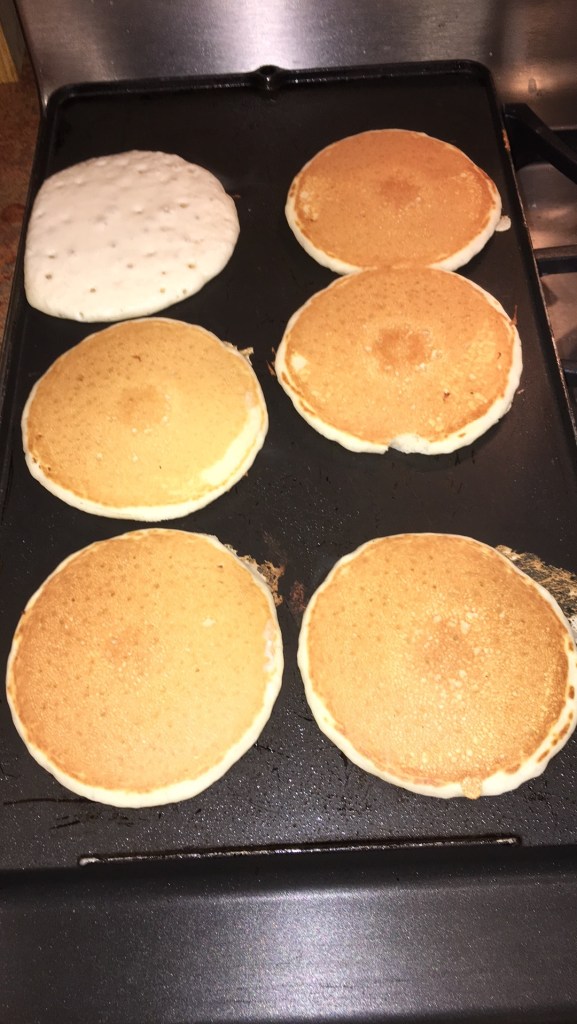
            Lesson one: Pancakes. This is as simple as it gets. Start by preheating your largest non-stick pan or grill. I own a Coleman heavy duty cast aluminum nonstick camping gill. It covers two burners on my stovetop and is made to last.  I can make up to eight pancakes at once on this baby. Next comes preparing the batter. TODAY – you can buy pancake mix that is already “complete”. Just add water and there it’s done. Well I lied, there is a little cooking involved. So you will need a pan or grill, a spatula, and a spoon or ladle. You want to start off easy don’t you and work your way up. Then BOOM….here you go. Yeah, I know, its “bam!” but that belongs to someone else. Just follow the directions on the box. Step one: Add a cup of water. “Crap now we need a coffee cup”? NO! You don’t use a coffee cup to measure liquids in the twenty first century. You use a measuring cup. “Didn’t you watch the video”? Anyhow, measure the liquid (in this case water) carefully and add it to the dry mix in a LARGE bowl or extra large measuring cup and stir it in. Yes, with a fork or a whisk.

            Up until the early 1800s cooking was an art that took a lifetime to learn and all day to prepare. One of the things that made cooking so hard was there were NO measuring cups or measuring spoons! Could you imagine getting a recipe and have to guess the size of the cup or that everyone’s teaspoons were a different sizes as well as their cups! It wasn’t until the late nineteenth century when the Cooking School of Boston and Fanny Farmer wrote out recipes that included even measurements. This was the first time in American cooking that graduated measuring cups and spoons were used to make using a recipe the same for anyone who could get the equipment. Remember too that she was still cooking using wood or coal for heat. 

            Ok, back to our recipe and cooking in the twenty first century. Can you tell me what’s happening? “Yes, yes (eye roll) your cooking very funny”. What’s happening in the bowl? The water is being absorbed by the flour and there is also a leavening agent in there to make the pancakes light and fluffy called baking powder. That’s why those little bubbles are forming. It is actually double acting baking powder. That means it bubbles once because of the chemical reaction with the acid of buttermilk or cream of tartar and the base of baking soda. Then the second reaction occurs when you add heat or pour the batter onto the pan. “POOF” – it forms even more bubbles and rises on the grill.

            {Trivia note} Cream of tartar has been around for centuries as it is formed naturally on wine casks and wine corks.   Cream of tartar also known as Potassium bitartrate, also known as potassium hydrogen tartrate, with formula KC4H5O6, is a byproduct of winemaking.  Mmm wine.

            WAIT. Let the batter sit on the grill and as much as you want to touch it…..watch it, now as the edges just begin to harden and see bubbles in the center- Flip it. “YES! with a Spatula or as we called it in my house growing up a Pan Cake Turner! It should be anywhere from golden brown to a deep a rich brown. See, remember this is where the paying attention part comes in. I hope you have not had too many Mimosas or Bloody Mary’s yet. 

            So, how do they look? Too fat you say? You can add a few tablespoons more of water and thin out the batter or are they too thin? Add more mix…..SLOWLY! Cooking is half science and half well a crap shoot!!

You just cooked your first meal! BREAKFAST IS SERVED!!! Don’t forget the butter, the maple syrup and your mimosa (or some peoples fave, a Bellini).

            Next, we can get all fancy and add eggs, sausage, bacon and fresh squeezed OJ. Nah, I’ll just stick with the Mimosa. You can also try making the pancakes from a recipe from scratch or trying many different variations of pancakes like chocolate chip or blueberry. Just remember to practice your new cooking skills to get better.

            How about waffles next! It is basically the same concept but now you need a specialized piece of equipment called a waffle iron. NO, it won’t work on your clothes.  It’s not likely that you can make these on your next camping trip either.  This process is just a little bit more messy and harder to clean up so of course I don’t make them often, mainly I keep waffles for snow days or really lazy Sundays.   For this you need to buy the ORIGNAL pancake mix and mix up the waffle version is on the back or try using my favorite, Bisquick.

2 cups Bisquick

1 1/3 c milk

1 tablespoon oil

1 egg

Now your cooking! Why is there no baking soda or baking powder? Because it’s in the Bisquick already!

            Preheat the waffle Iron. Mix together the batter. Grease the waffle iron with vegetable oil or shortening. Only if necessary. Today most waffle irons are nonstick already therefore you do not need any grease on the grills. Plus, I believe, that when used over a long period of time the spray stuff builds up on the nonstick surface and makes stuff stick to those kinds of pans.

This is just the beginning, the more you learn about leavening agents, flour, water, sugar and fat and how they interact the better of a baker you will be. In the following pages of this book you will learn what happens when you apply heat. When you begin to learn the effects that yeast have on dough, you become more and more of a BAKER! Whoa slow down we are not ready yet for homemade bread but it’s coming along with pizza dough, cakes, pies, rolls pastries and COOKIES!

We have to learn to walk before we can run…..right now at least where moving….crawling but on our way. Pancakes, file it under your first real recipe.

Keep cooking pancakes until our next lesson… Will it be breakfast, then dessert or lunch? Maybe Mimosas… hmmm.

The Drunken Chef (AKA – Russ)


© Russ Ahrens and The Magic of a Perfect Pairing,2023


        .

© Russ Ahrens and The Magic of a Perfect Pairing,2023